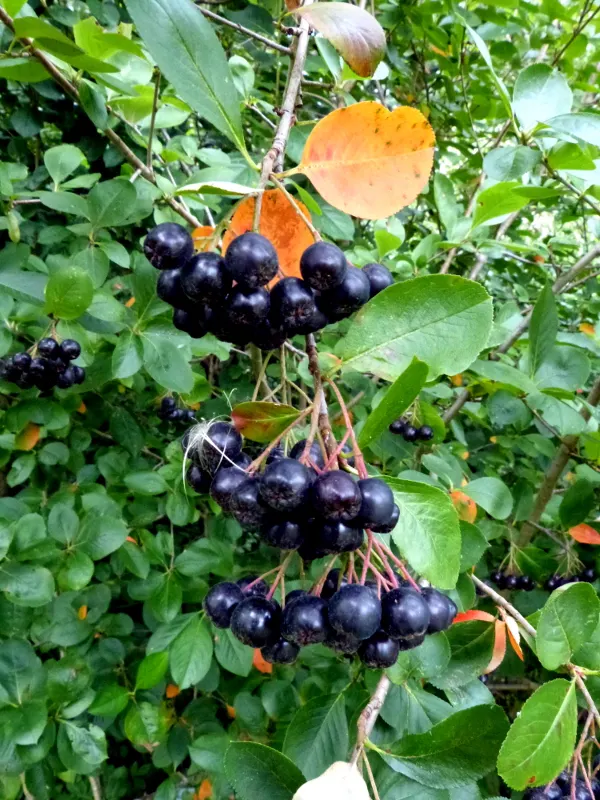
Photo: manfred.sause@volloeko.de, CC BY-SA 3.0 (via Wikimedia Commons)
Black Chokeberry
Aronia melanocarpa
Also known as Aronia Berry, Chokeberry, Black Aronia
Key benefits
✦Traditional uses
✦Black chokeberry has quietly nourished two very different traditions on two continents. Long before European contact, Native peoples of the eastern woodlands gathered the tart, dark berries and dried them into cakes and pemmican-like mixtures to carry through the lean months, valuing them as a hardy, storable food when little else was ripe. In the early twentieth century the shrub found a second homeland in Russia and Eastern Europe, where it was bred and embraced by families who simmered the berries into juices, syrups, and tonics traditionally taken to support the heart and to help see the household through cold season. The name is an honest warning label, the berries are famously mouth-puckering and astringent eaten raw, which is exactly why they were almost always cooked, dried, or sweetened before use.
Growing guide
✦Fresh to dried
✦Traditional preparations
✦Aronia Berry Tea
A tart, deep-purple infusion traditionally sipped as a heart-supportive, vitamin C rich tonic through the colder months.
How it's made. Traditionally, 1 tablespoon of dried aronia berries is gently simmered in 250 ml of water for 10 minutes, then strained before drinking.
Simple Aronia Syrup
A lightly sweetened decoction in the style long favored in Eastern European households, stirred into water or tea as a daily tonic.
How it's made. Traditionally, 1 cup of fresh or dried berries is simmered in 2 cups of water for about 15 minutes, strained, and sweetened with honey to taste.
- ✦Hawthorn
- ✦Elderberry
- ✦Hibiscus
- ✦Elderberry
- ✦Chokecherry
“For the deep-purple tonic that carries a whole woodland winter of resilience in one tart, dark berry.”
Aronia berries carry one of the highest antioxidant (ORAC) values of any temperate fruit, by some measurements outranking blueberries, yet this North American native shrub was largely overlooked at home until Russian breeding programs turned it into a beloved garden fruit and sent its reputation back across the Atlantic.
Ripe aronia berries are safe cooked, dried, or juiced, though eating them raw in quantity can cause stomach upset from their tannins. As with other Rosaceae fruits, don't crush and eat the seeds in bulk, and use care combining concentrated preparations with blood pressure medication or blood thinners.